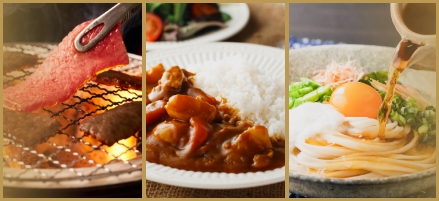
Wagyu Street combines the allure of wagyu beef with the casual fun of street food. This article discusses the Wagyu Street franchise, including the brand’s background and key menu features.

This brand is an original U.S.-born concept produced by the Japanese yakiniku chain Gyushige. It reworks high-quality beef, such as wagyu and USDA Prime, into a casual format that can be enjoyed in food courts and other settings.
Business MA handles the practical aspects of franchise recruitment and local rollout in the United States, including support for E-2 investor visas, commercial real estate, and M&A. Business MA provides procedural support for investment immigration in collaboration with Japanese-speaking staff, including support related to properties, business planning, and financing.

Wagyu Street is designed to bring a rich wagyu experience to everyday settings like food courts and food halls. The menu features a wide range of grades, including USDA Prime, American wagyu, and Japanese wagyu, and meals can be customized by selecting different cuts and sauces.
Wagyu beef has traditionally been associated with high-end restaurants and viewed as a dining choice for special occasions. However, Wagyu Street incorporates wagyu into various offerings such as bento boxes, bowls, sandwiches, salads, sushi, and curry. This approach optimizes pricing, service speed, and turnover rates, while simultaneously broadening access to the experience.
The food-court-ready QSR model also leads to a leaner staffing structure and reduced capital investment, making it easier to shorten the time to return on investment.
The brand’s menu offers a high degree of flexibility with combinations of a base, meat, and sauce, while the operations are easily standardized.
The design allows customers to select from USDA Prime, American wagyu, or Japanese wagyu across formats such as bento, sandwiches, bowls and salads, sushi, and curry, and complete the dish with an original yakiniku sauce.
Wagyu Street clearly highlights sake pairings, creating a slightly upscale experience even within a food court and helping raise average check. Pairing-based recommendations are well suited to attracting customers in the evening and meeting weekend event demand, and they are also effective for traffic-flow planning that captures facility event traffic and nearby office demand.
As illustrated above, it is essential to evaluate potential profitability based on cuisine characteristics and to ensure that operations are manageable.This website details the culinary features and support structures provided by each franchise brand. We also feature three carefully selected Japanese franchise brands based on regional suitability, so please be sure to review them as well.
Choose by area characteristics
Three Selected
Japanese Food Franchises
*Note that the content and scope of each item may vary depending on the region and contract conditions. For details, please check directly with the recruitment office.
| - | - stars |
|---|
No reviews were found on TripAdvisor.
| Franchise fee | $40,000 |
|---|---|
| Initial investment | Total investment: $377,200 to $577,230 (estimated) |
| Royalty | Not listed on the official website |
| Company Name | GYUSHIGE U.S.A. LLC |
|---|---|
| Total Number of Restaurants (Including Company-Operated Locations) | 167 locations (2 in the United States and 165 in Asia) Based on information from the official website as of November 13, 2025 |
| Address | 103 Bellevue Way NE Suite 3 Bellevue WA 98004 |
This model combines the premium quality of wagyu with a casual format, making it a strong fit for food halls and large commercial facilities.
For those looking to ramp up customer traffic in the short term, the appeal lies in leveraging facility traffic while capturing “little luxury” demand through sake pairings and limited-time menus. Even in highly competitive urban areas, the “Japanese brand = high quality” image can be leveraged, making it suitable for those who want to create higher average check size with differentiated offerings.
In terms of location, large commercial facilities in suburban areas with many families, as well as food halls in urban areas with a high proportion of high-income residents and a high level of multicultural openness, are particularly well suited.
This media platform also features three recommended Japanese franchise brands, carefully selected based on regional suitability. Please be sure to review them as well.
Choose by area characteristics
Three Selected
Japanese Food Franchises
Even within Japanese food, the most receptive customer segments vary by genre. This section introduces recommended Japanese food genres based on the characteristics of the prospective area, along with Japanese franchise brands that already operate locations in the United States. The focus is on the food that can be offered by joining each franchise brand.
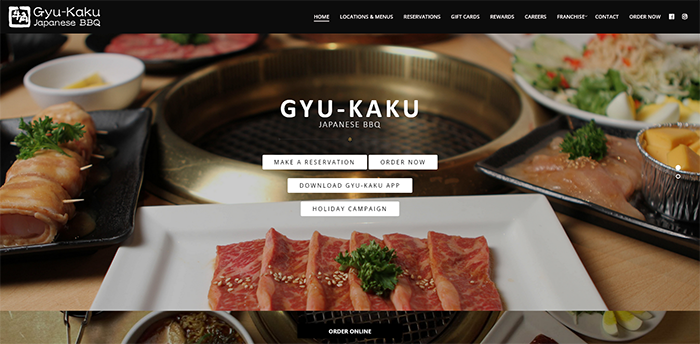
Gyu-Kaku delivers authenticity through certified Japanese A5 Wagyu. By also featuring USDA Prime beef, they offer steakhouse-quality dining at accessible prices.
From import to processing, Japanese staff strictly manage quality at every step, delivering the same authentic flavor found in premium yakiniku restaurants in Japan.
| Franchise fee | $50,000 |
|---|---|
| Initial investment | Approx. $1,215,444 to $2,606,540 |
| Royalty | 5% on annual sales up to approx. $1,500,000 4.5% on annual sales from approx. $1,500,000 to $2,000,000 4% on annual sales over approx. $2,000,000 |
| Number of restaurants | 825 worldwide (including 63 in the United States and 580 in Asia) |
| TripAdvisor rating | 4.3 out of 5.0 (442 reviews)*2 |
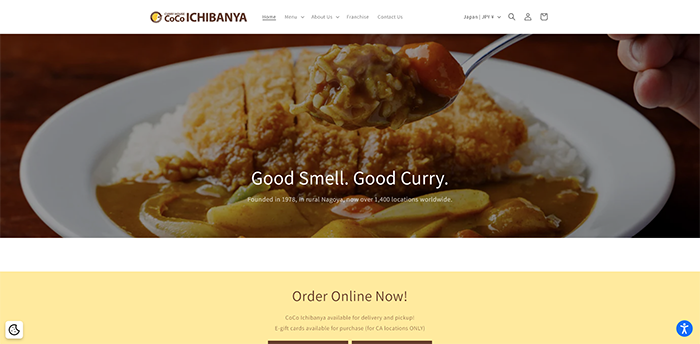
A wide range of toppings, from chicken katsu to omelets, ensures a fresh experience every visit, driving strong customer loyalty.
In addition to toppings, customers can adjust rice portions and spice levels, making the menu enjoyable for those who prefer milder flavors as well as those who want larger portions.
| Initial franchise fee | $40,000 |
|---|---|
| Initial investment | Not listed |
| Royalty | Not listed |
| Number of restaurants | 1,480 worldwide (including 11 in the United States and 1,467 in Asia) |
| TripAdvisor rating | 4.3 out of 5.0 (41 reviews)*3 |
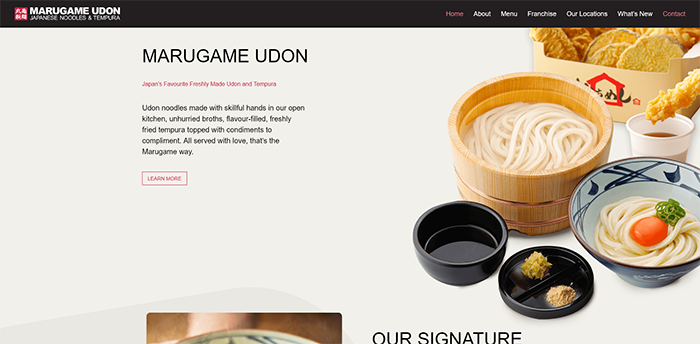
As a popular chain with 861 locations in Japan*1, franchisees are able to consistently serve udon noodles with a firm, chewy texture, supported by the headquarters after opening.
The noodle-making, boiling, and cooling processes are demonstrated in an open kitchen, allowing customers to enjoy a freshly made, live dining experience.
| Franchise fee | $40,000 to $64,000 |
|---|---|
| Initial investment | $1,126,500 to $1,980,000 |
| Royalty | 5% of sales |
| Number of restaurants | 1,188 worldwide (including 23 in the United States and 1,155 in Asia) |
| TripAdvisor rating | 4.5 out of 5.0 (108 reviews)*4 |
*1 Source: Marugame Udon official website(https://jp.marugame.com/shop/), as of a December 2025 survey
*2 TripAdvisor: New York City location, as of October 28, 2025(https://www.tripadvisor.jp/Restaurant_Review-g60763-d3175593-Reviews-Gyu_Kaku_Japanese_BBQ-New_York_City_New_York.html)
*3 TripAdvisor: Irvine location, as of October 28, 2025(https://www.tripadvisor.jp/Restaurant_Review-g32530-d9750729-Reviews-Coco_Ichibanya-Irvine_California.html)
*4 TripAdvisor: Los Angeles location, as of October 28, 2025(https://www.tripadvisor.jp/Restaurant_Review-g32655-d4019757-Reviews-Marugame_Monzo-Los_Angeles_California.html)
* TripAdvisor ratings are based on the highest-rated U.S. location.
*The number of restaurants is based on the following references. As of a December 2025 survey
Gyu-Kaku official website(https://www.gyukaku.ne.jp/world.php)
CoCo Ichibanya official website(https://www.ichibanya.co.jp/comp/ir/finance/highlight/graph01.html)
Marugame Udon official website(https://jp.marugame.com/shop/)