Okonomiyaki is an iconic Japanese flour-based dish made by mixing cabbage, pork, seafood, and other ingredients into a wheat batter and cooking it on a teppan (iron griddle). In recent years, it has gained recognition outside Japan, and its convenience and live cooking style have been well received.
This article summarizes the okonomiyaki format from a franchise business framework, focusing on three areas: profitability, the competitive landscape, and operations.

The okonomiyaki genre combines flour-based dishes that support higher average spend per customer, the added value of cooking performed in front of customers, and relatively easy cost control, making it one of the more profitable business models in foodservice.
With ample room for menu expansion, offerings can be tailored to regional preferences and target audiences, including items such as yakisoba, teppan-grilled dishes, lunch bowls, and takeout options.
By joining a franchise, you receive systematized support for recipes and operations, as well as know-how for site opening, procurement, and marketing. This can shorten the launch period and reduce trial-and-error costs.
Because the core ingredients are flour and vegetables, it is a format that makes it easier to design food-cost ratios. By offering meat or seafood toppings, operators can raise average check while keeping cost fluctuations in check with the base batter and cabbage.
Another strength is that add-on sales of drinks and side dishes make it easier to build a model that accumulates gross margin during evening hours.
Competition for okonomiyaki is not limited to the same format; it includes a wide range of dining options such as ramen, yakiniku, izakaya, and fast food. Key differentiation points include live, show-style cooking, the flavor design of an original sauce, flexibility in toppings, and storytelling as a Japanese dining experience.
Performances at the teppan and a participatory style where customers take part in the finishing touches are well suited to social media, helping spread awareness and attract customers. If the franchise headquarters provides a brand story and visual standards, each location can present a highly consistent brand world, making it less likely to be drawn into price competition.
As of October 2025, there are 23,490 Japanese restaurants in the United States*1. Of those, only 17 are okonomiyaki restaurants*2, suggesting that competition within the same format is still limited.
Teppan cooking is central, and many factors can affect quality, including heat control, batter moisture, cabbage cut size, and cooking temperature and time management.
In a franchise, these factors are codified into recipes and procedures and taught through video manuals and checklists, making it possible to reduce reliance on individual skills. If you adopt a model in which batter and sauce are supplied from a central kitchen, it is possible to further reduce prep workload and flavor variation.
Okonomiyaki franchises are a format that makes it easier, even for individual owners, to build a highly replicable model thanks to easy food-cost design, the added value of a live serving experience in front of guests, and flexible menu expansion.
Even in highly competitive areas, a strong brand story and well-designed customer experience can help create a restaurant that customers choose for reasons beyond price.
When considering a franchise, it is best to compare brands based on whether they provide systems such as standardized recipes and operations, trade-area analysis support, training programs, central supply, and delivery and multilingual support.
This media platform also features three recommended Japanese franchise brands, carefully selected based on regional suitability. Please be sure to review them as well.
Even within Japanese food, the most receptive customer segments vary by genre. This section introduces recommended Japanese food genres based on the characteristics of the prospective area, along with Japanese franchise brands that already operate locations in the United States. The focus is on the food that can be offered by joining each franchise brand.
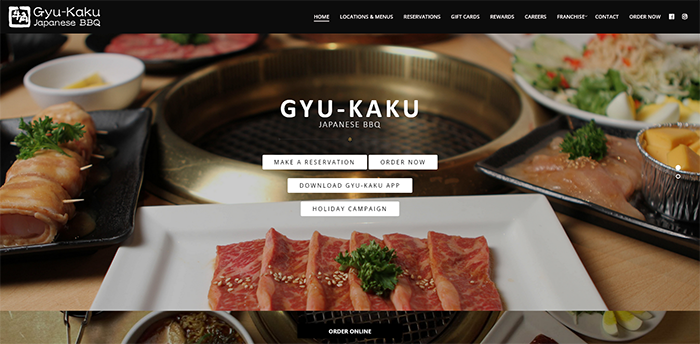
Gyu-Kaku delivers authenticity through certified Japanese A5 Wagyu. By also featuring USDA Prime beef, they offer steakhouse-quality dining at accessible prices.
From import to processing, Japanese staff strictly manage quality at every step, delivering the same authentic flavor found in premium yakiniku restaurants in Japan.
| Franchise fee | $50,000 |
|---|---|
| Initial investment | Approx. $1,215,444 to $2,606,540 |
| Royalty | 5% on annual sales up to approx. $1,500,000 4.5% on annual sales from approx. $1,500,000 to $2,000,000 4% on annual sales over approx. $2,000,000 |
| Number of restaurants | 825 worldwide (including 63 in the United States and 580 in Asia) |
| TripAdvisor rating | 4.3 out of 5.0 (442 reviews)*2 |
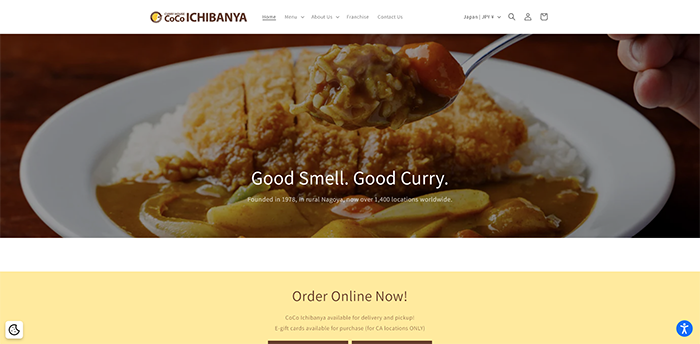
A wide range of toppings, from chicken katsu to omelets, ensures a fresh experience every visit, driving strong customer loyalty.
In addition to toppings, customers can adjust rice portions and spice levels, making the menu enjoyable for those who prefer milder flavors as well as those who want larger portions.
| Initial franchise fee | $40,000 |
|---|---|
| Initial investment | Not listed |
| Royalty | Not listed |
| Number of restaurants | 1,480 worldwide (including 11 in the United States and 1,467 in Asia) |
| TripAdvisor rating | 4.3 out of 5.0 (41 reviews)*3 |
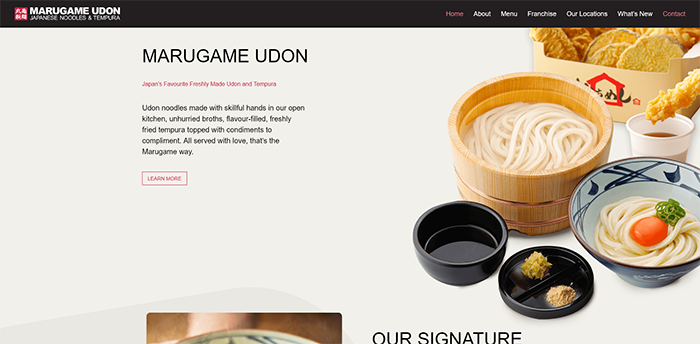
As a popular chain with 861 locations in Japan*1, franchisees are able to consistently serve udon noodles with a firm, chewy texture, supported by the headquarters after opening.
The noodle-making, boiling, and cooling processes are demonstrated in an open kitchen, allowing customers to enjoy a freshly made, live dining experience.
| Franchise fee | $40,000 to $64,000 |
|---|---|
| Initial investment | $1,126,500 to $1,980,000 |
| Royalty | 5% of sales |
| Number of restaurants | 1,188 worldwide (including 23 in the United States and 1,155 in Asia) |
| TripAdvisor rating | 4.5 out of 5.0 (108 reviews)*4 |
*1 Source: Marugame Udon official website(https://jp.marugame.com/shop/), as of a December 2025 survey
*2 TripAdvisor: New York City location, as of October 28, 2025(https://www.tripadvisor.jp/Restaurant_Review-g60763-d3175593-Reviews-Gyu_Kaku_Japanese_BBQ-New_York_City_New_York.html)
*3 TripAdvisor: Irvine location, as of October 28, 2025(https://www.tripadvisor.jp/Restaurant_Review-g32530-d9750729-Reviews-Coco_Ichibanya-Irvine_California.html)
*4 TripAdvisor: Los Angeles location, as of October 28, 2025(https://www.tripadvisor.jp/Restaurant_Review-g32655-d4019757-Reviews-Marugame_Monzo-Los_Angeles_California.html)
* TripAdvisor ratings are based on the highest-rated U.S. location.
*The number of restaurants is based on the following references. As of a December 2025 survey
Gyu-Kaku official website(https://www.gyukaku.ne.jp/world.php)
CoCo Ichibanya official website(https://www.ichibanya.co.jp/comp/ir/finance/highlight/graph01.html)
Marugame Udon official website(https://jp.marugame.com/shop/)