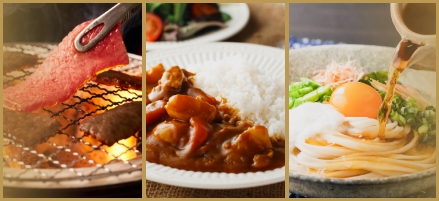
In the United States, not only sushi but a wide range of Japan-origin formats, from yakiniku and udon to donburi, Japanese-style chicken, and Japanese sweets, are increasingly blending into local food culture.
This article explains why now is the time to choose a Japanese food franchise, based on trends in the U.S. market.
Beyond sushi and ramen, it is also expanding into categories such as yakiniku and udon that offer strong “experiential appeal” and “immediacy.” Chains offering Japanese-style yakiniku have built networks of locations in major cities since the early 2000s, and the experience of grilling at the table has attracted local interest.
Self-service udon specialty locations have also gained fans, especially in Hawaii, California, and Texas, and the open-kitchen setup, freshly prepared service, and the fun of choosing toppings such as tempura have been well received.
These developments can be seen as evidence that the popularity of Japanese food is diversifying and becoming firmly established.
According to the market research firm Data Bridge Market Research, the Japanese food restaurant market in North America is valued at approximately $5.11 billion as of 2024. Furthermore, it is expected to grow to about $6.59 billion by 2032*1.
One factor spurring market expansion in the United States is the growing awareness of the health benefits of Japanese cuisine.
The expansion of the market as a whole has lowered entry barriers in terms of ingredient procurement, logistics, and brand recognition. This has created favorable conditions for the scaling of franchises.
As Japanese food continues to spread in the United States, differentiation from competitors requires more than “Japanese-style” offerings. What is needed is authentic Japanese food delivered through Japan-origin franchise brands.
“Authentic” does not simply mean using the same ingredients as in Japan. It means staying true to the core experiential value, from the design philosophy behind dashi and sauces, to standards for cooking and knife work, and even service speed and staff mannerisms.
Japanese food brands that are well regarded in the United States make Japanese-style processes highly visible through open kitchens and self-service lines, achieving both quality control and speed.
That is why it is essential to standardize ingredient specifications, ensure consistent control of dashi and sauces, design traffic flow for peak periods, and standardize staff training (including greetings and mannerisms), so the same “Japanese-style experience” can be replicated at every location.
On this website, we carefully curate and feature Japan-origin franchise brands that can deliver authentic Japanese food. We hope this serves as a helpful reference.
View Three Japanese Food Franchises
Selected from Japan-Origin Brands
Demand is possible even in smaller cities, but designing a model tailored to each city’s characteristics is critical. In suburban and regional cities, reasons for visiting include experience-focused dining for families and groups, quick-turnover fast casual, and strong takeout and delivery capabilities.
Participatory dining like yakiniku tends to create weekend demand peaks, while counter-focused formats like udon are better positioned to capture weekday lunch demand.
It varies widely depending on the brand, property type (second-generation space or new build), kitchen equipment specifications, interior design, seating capacity, whether alcohol is served, and the IT/POS setup.
For example, one teriyaki franchise lists total initial and opening costs of $376,200 to $975,860.
The Franchise Disclosure Document (FDD) specifies the estimated investment range and also lists royalties and advertising contributions, so be sure to review it carefully.
Yes, it is possible to operate the business. Many Japanese food franchises provide English-language operations manuals and training programs, as well as POS and inventory management systems, and cooking processes and quality standards are standardized using visual tools and numeric benchmarks.
In the United States, new mainstays such as yakiniku and udon are emerging, and Japanese food that offers both experiential appeal and immediacy aligns well with shifting local preferences.
The key to success is how well you can replicate what “authentic” truly means. By visualizing processes, standardizing sauces and dashi, and standardizing traffic flow design and training, brands can deliver the same Japanese-style experience at every location, giving customers a strong reason to choose them beyond price.
If you build your plan around three pillars—market growth, brand story, and the right balance of local optimization—Japanese food franchises can be a promising option for individual entrepreneurs.
Even within Japanese food, the most receptive customer segments vary by genre. This section introduces recommended Japanese food genres based on the characteristics of the prospective area, along with Japanese franchise brands that already operate locations in the United States. The focus is on the food that can be offered by joining each franchise brand.
Advertiser Disclosure:
We receive compensation from some of the companies listed below.This compensation may affect which companies are included and the order in which they appear.
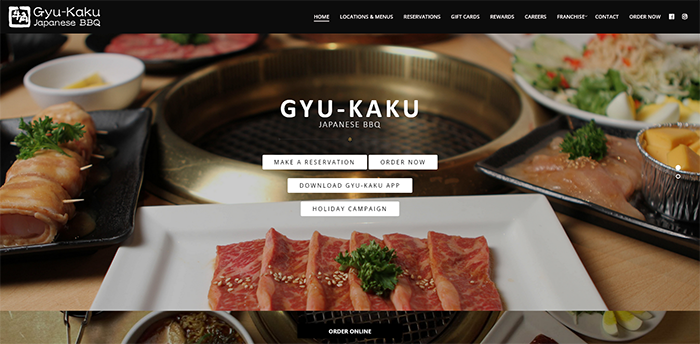
Gyu-Kaku delivers authenticity through certified Japanese A5 Wagyu. By also featuring USDA Prime beef, they offer steakhouse-quality dining at accessible prices.
From import to processing, Japanese staff strictly manage quality at every step, delivering the same authentic flavor found in premium yakiniku restaurants in Japan.
| Franchise fee | $50,000 |
|---|---|
| Initial investment | Approx. $1,215,444 to $2,606,540 |
| Royalty | 5% on annual sales up to approx. $1,500,000 4.5% on annual sales from approx. $1,500,000 to $2,000,000 4% on annual sales over approx. $2,000,000 |
| Number of restaurants | 825 worldwide (including 63 in the United States and 580 in Asia) |
| TripAdvisor rating | 4.3 out of 5.0 (442 reviews)*2 |
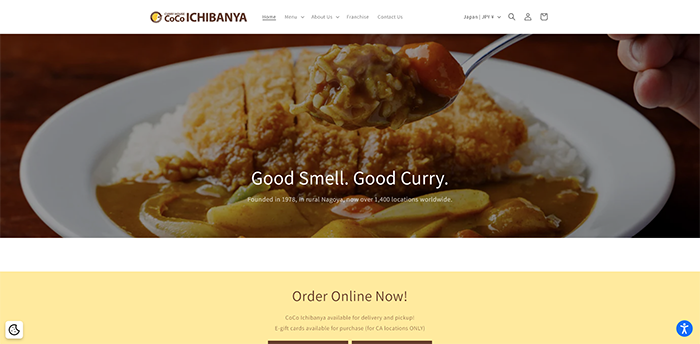
A wide range of toppings, from chicken katsu to omelets, ensures a fresh experience every visit, driving strong customer loyalty.
In addition to toppings, customers can adjust rice portions and spice levels, making the menu enjoyable for those who prefer milder flavors as well as those who want larger portions.
| Initial franchise fee | $40,000 |
|---|---|
| Initial investment | Not listed |
| Royalty | Not listed |
| Number of restaurants | 1,480 worldwide (including 11 in the United States and 1,467 in Asia) |
| TripAdvisor rating | 4.3 out of 5.0 (41 reviews)*3 |
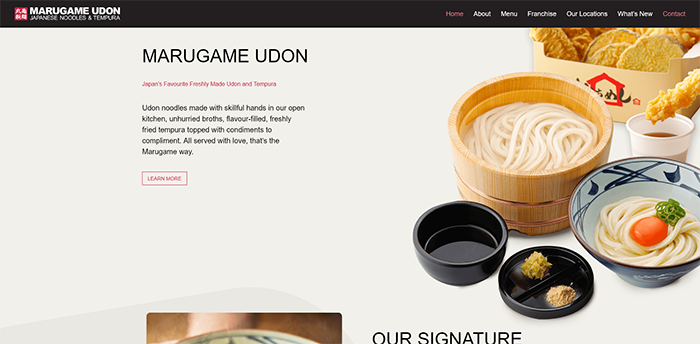
As a popular chain with 861 locations in Japan*1, franchisees are able to consistently serve udon noodles with a firm, chewy texture, supported by the headquarters after opening.
The noodle-making, boiling, and cooling processes are demonstrated in an open kitchen, allowing customers to enjoy a freshly made, live dining experience.
| Franchise fee | $40,000 to $64,000 |
|---|---|
| Initial investment | $1,126,500 to $1,980,000 |
| Royalty | 5% of sales |
| Number of restaurants | 1,188 worldwide (including 23 in the United States and 1,155 in Asia) |
| TripAdvisor rating | 4.5 out of 5.0 (108 reviews)*4 |
*1 Source: Marugame Udon official website(https://jp.marugame.com/shop/), as of a December 2025 survey
*2 TripAdvisor: New York City location, as of October 28, 2025(https://www.tripadvisor.jp/Restaurant_Review-g60763-d3175593-Reviews-Gyu_Kaku_Japanese_BBQ-New_York_City_New_York.html)
*3 TripAdvisor: Irvine location, as of October 28, 2025(https://www.tripadvisor.jp/Restaurant_Review-g32530-d9750729-Reviews-Coco_Ichibanya-Irvine_California.html)
*4 TripAdvisor: Los Angeles location, as of October 28, 2025(https://www.tripadvisor.jp/Restaurant_Review-g32655-d4019757-Reviews-Marugame_Monzo-Los_Angeles_California.html)
* TripAdvisor ratings are based on the highest-rated U.S. location.
*The number of restaurants is based on the following references. As of a December 2025 survey
Gyu-Kaku official website(https://www.gyukaku.ne.jp/world.php)
CoCo Ichibanya official website(https://www.ichibanya.co.jp/comp/ir/finance/highlight/graph01.html)
Marugame Udon official website(https://jp.marugame.com/shop/)