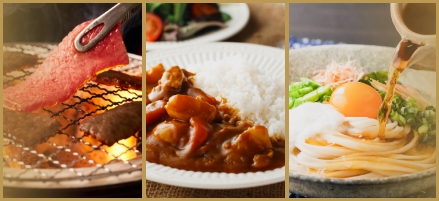
Donburi is a dish that is representative of Japanese cuisine. Featuring rice as the main ingredient, it is topped with meat, fish, vegetables, eggs, and other ingredients, all served in a single bowl. In the United States, rice bowl dishes such as teriyaki and pork bowl have already become mainstream. This has created an environment where Japanese flavors are more easily embraced.
This article summarizes why the donburi format can be a strong franchise option from a franchise business framework.

In North America, the bowl format has become a dining staple, driven by health-conscious trends and strong takeout suitability. In particular, one-bowl formats like poke bowls—combining “rice + protein + vegetables”—match demand for health, customization, and speed of service, driving growth in related formats. For example, poke-focused restaurants are estimated to have grown at an average annual rate of 4.9% over the five years through 2024, with the market projected at about $2 billion in 2025*.
Since the COVID-19 pandemic, a structural shift toward fast-casual dining and delivery/takeout has accelerated, and donburi, which is quick to serve and complete in a single bowl, is a format that fits this demand well.
Even in the U.S. market, the donburi format makes it easy to build a well-balanced profit model by balancing pricing and food costs.
For example, Tokyo Shokudo in Dallas offers katsudon and one-plate set meals for around $15 per item (as of 2022)*.
Assuming a food-cost ratio of 30%, the food cost per serving would be about $4.50, leaving sufficient gross margin. With a simple cooking process and fast service, the format is well suited to high lunchtime turnover, making it a high investment-efficiency model.
In the dining-out market, quick meal formats similar to donburi include curry, noodles, burgers, and plate meals. However, donburi is differentiated by being “complete with a spoon and chopsticks” and by “concentrating flavors in a single bowl.”
Another competitive advantage is its high adaptability to local tastes, allowing flavors to be adjusted to sweet-and-savory, salt-based sauces, miso, citrus, and more. This makes it possible to localize while staying on a single platform.
As of 2025, the United States has 4,652 ramen restaurants*1 and 297 curry restaurants*2, compared with just 12 donburi restaurants*3. Compared to similar formats such as ramen and curry, donburi faces lower competition.
As of October 2025, the number of tonkatsu restaurants has grown to 118*4, making dishes like katsudon, which combines tonkatsu and donburi, a promising option.
Donburi integrates “staple + main + side” in a single bowl, and standardizing sauces and dashi makes it easy to replicate consistent quality. By leveraging central kitchens and premixes, operators can reduce flavor variation while balancing dine-in turnover and takeout. This makes donburi a category with high compatibility with the franchise model.
In the kitchen, standardized prep and portion control are essential. If portions are standardized for rice, sauce, and toppings, even less-experienced staff can replicate the target taste and presentation in a short time, reducing the burden of hiring and training.
Donburi franchises make it easy to standardize flavor, and they are a format that makes it easy to build sales through both high turnover and off-premise sales. Thanks to versatile ingredients and simplified processes, donburi franchises offer high reproducibility in staff training, shift planning, and quality control, making them attractive for individual owners seeking to launch a business quickly.
Ingredients specific to Japanese cuisine, such as mirin, sake, and dashi ingredients, can be difficult to procure consistently while managing tariffs and shipping lead times. Price swings and stockouts can quickly affect food-cost ratios and customer satisfaction. Differentiation can be achieved by joining a franchise originating in Japan and replicating authentic flavors and techniques.
This media platform also features three recommended Japanese franchise brands, carefully selected based on regional suitability. Please be sure to review them as well.
Even within Japanese food, the most receptive customer segments vary by genre. This section introduces recommended Japanese food genres based on the characteristics of the prospective area, along with Japanese franchise brands that already operate locations in the United States. The focus is on the food that can be offered by joining each franchise brand.
Advertiser Disclosure:
We receive compensation from some of the companies listed below.This compensation may affect which companies are included and the order in which they appear.
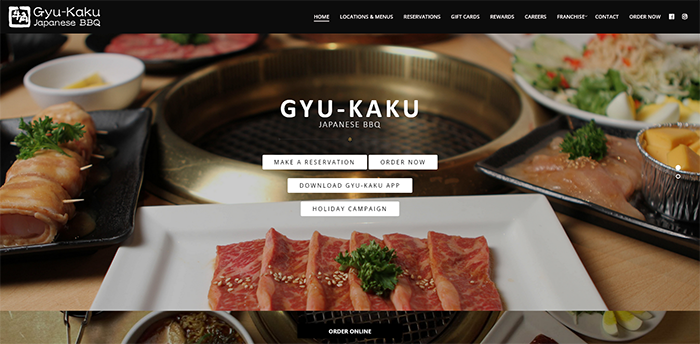
Gyu-Kaku delivers authenticity through certified Japanese A5 Wagyu. By also featuring USDA Prime beef, they offer steakhouse-quality dining at accessible prices.
From import to processing, Japanese staff strictly manage quality at every step, delivering the same authentic flavor found in premium yakiniku restaurants in Japan.
| Franchise fee | $50,000 |
|---|---|
| Initial investment | Approx. $1,215,444 to $2,606,540 |
| Royalty | 5% on annual sales up to approx. $1,500,000 4.5% on annual sales from approx. $1,500,000 to $2,000,000 4% on annual sales over approx. $2,000,000 |
| Number of restaurants | 825 worldwide (including 63 in the United States and 580 in Asia) |
| TripAdvisor rating | 4.3 out of 5.0 (442 reviews)*2 |
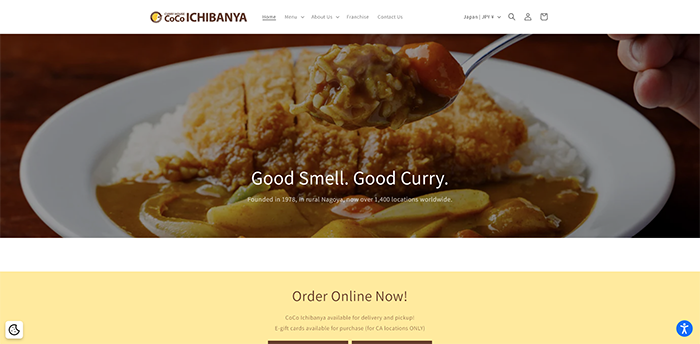
A wide range of toppings, from chicken katsu to omelets, ensures a fresh experience every visit, driving strong customer loyalty.
In addition to toppings, customers can adjust rice portions and spice levels, making the menu enjoyable for those who prefer milder flavors as well as those who want larger portions.
| Initial franchise fee | $40,000 |
|---|---|
| Initial investment | Not listed |
| Royalty | Not listed |
| Number of restaurants | 1,480 worldwide (including 11 in the United States and 1,467 in Asia) |
| TripAdvisor rating | 4.3 out of 5.0 (41 reviews)*3 |
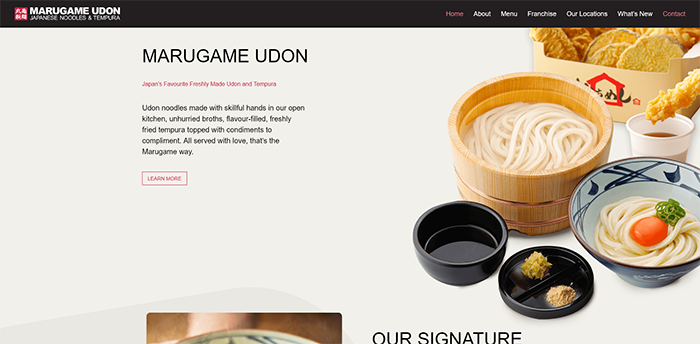
As a popular chain with 861 locations in Japan*1, franchisees are able to consistently serve udon noodles with a firm, chewy texture, supported by the headquarters after opening.
The noodle-making, boiling, and cooling processes are demonstrated in an open kitchen, allowing customers to enjoy a freshly made, live dining experience.
| Franchise fee | $40,000 to $64,000 |
|---|---|
| Initial investment | $1,126,500 to $1,980,000 |
| Royalty | 5% of sales |
| Number of restaurants | 1,188 worldwide (including 23 in the United States and 1,155 in Asia) |
| TripAdvisor rating | 4.5 out of 5.0 (108 reviews)*4 |
*1 Source: Marugame Udon official website(https://jp.marugame.com/shop/), as of a December 2025 survey
*2 TripAdvisor: New York City location, as of October 28, 2025(https://www.tripadvisor.jp/Restaurant_Review-g60763-d3175593-Reviews-Gyu_Kaku_Japanese_BBQ-New_York_City_New_York.html)
*3 TripAdvisor: Irvine location, as of October 28, 2025(https://www.tripadvisor.jp/Restaurant_Review-g32530-d9750729-Reviews-Coco_Ichibanya-Irvine_California.html)
*4 TripAdvisor: Los Angeles location, as of October 28, 2025(https://www.tripadvisor.jp/Restaurant_Review-g32655-d4019757-Reviews-Marugame_Monzo-Los_Angeles_California.html)
* TripAdvisor ratings are based on the highest-rated U.S. location.
*The number of restaurants is based on the following references. As of a December 2025 survey
Gyu-Kaku official website(https://www.gyukaku.ne.jp/world.php)
CoCo Ichibanya official website(https://www.ichibanya.co.jp/comp/ir/finance/highlight/graph01.html)
Marugame Udon official website(https://jp.marugame.com/shop/)