Teriyaki is a cooking style in which meat or fish is grilled with a sweet-and-savory soy sauce–based glaze. Teriyaki began as a cooking method in Japan, but in North America it developed in its own way into a soy sauce–based, barbecue-style meat dish.
With more than approximately 23,490* Japanese restaurants in the U.S. market, what makes franchising a worthwhile business option? This article organizes the reasons for choosing teriyaki among a wide range of options, such as ramen and sushi, from three perspectives: profitability, competitiveness, and operations.

In the U.S. market, teriyaki holds an advantageous position by combining strong name recognition with a clear Japanese food brand identity. Since the 1950s, companies such as Kikkoman have promoted soy sauce as a seasoning that pairs well with meat. As a result, teriyaki has moved beyond Japanese cuisine and become a familiar Japanese-style flavor in American households. For example, chicken teriyaki is a popular menu item, even at sushi and ramen restaurants.
Backed by the widespread recognition of teriyaki as a food genre, there are three key business advantages: (1) strong profitability in the growing Asian fast-food market, (2) relatively moderate competition compared with sushi and ramen, and (3) operations that are easy to manage even for owners with no prior foodservice experience.
Teriyaki is a business model that can generate strong sales relative to the investment amount. This is driven by the ability to ride a growing market and an ingredient lineup that makes it easier to secure profits.
Major chain Teriyaki Madness notes that Asian fast food sales have grown approximately fivefold since 1999. Teriyaki sits at the intersection of two growing segments: Asian and fast casual. Based on publicly available information in the FDD (2025 Edition), the average unit volume (AUV) is approximately $1.17 million*, and the initial investment range is approximately $370,000 to $970,000*. This suggests the format can target annual sales of over $1 million per location.
A key advantage of the teriyaki format is its reliance on staple ingredients such as chicken, beef, rice, and vegetables, which tend to have relatively stable prices. Compared to sushi, which uses large amounts of high-grade raw fish, this can help reduce procurement cost volatility and minimize waste.
Among Japanese food franchises, the teriyaki market is a niche with strong growth potential, characterized by high consumer familiarity with the flavor despite a relatively small number of dedicated chains.
According to PoiData’s 2025 statistics, there are approximately 23,490 Japanese restaurants,*1 and a separate report cites around 22,611 sushi restaurants*2 and about 4,652 ramen restaurants*3. With high restaurant counts across these segments, competition is intensifying.
By contrast, the dedicated “Teriyaki restaurant” category is not prominent in the statistics. Although familiarity with the flavor is very high because many Japanese and Asian restaurants offer it as a menu item, chains that prominently feature teriyaki—such as Sarku Japan (about 250 locations)*4 and Teriyaki Madness (about 209 locations)*5—are still fewer than sushi or ramen chains.
Additionally, what’s called “teriyaki” in the United States originated as a Japanese-style barbecue, and it tastes different from teriyaki in Japan. Japan-based brands that emphasize authentic teriyaki techniques and Japanese-style delicate seasoning still have room to differentiate themselves in both flavor and storytelling.
Even first-time foodservice owners can build an operational setup that makes on-site management easier. This is due to the simplicity of the menu and cooking process.
Many chains have adopted a “Build-a-Bowl” style, allowing customers to mix and match proteins (such as chicken and beef), sauces, and bases (such as rice and noodles). The menu is simple, making it easy for both customers and staff to understand. Unlike sushi chefs, who require highly specialized training, teriyaki is easier to manualize around the basics of “prep and grilling,” making it possible to standardize quality through training.
Additionally, a show-kitchen format in which food is cooked on a teppan (flat-top griddle) right in front of guests offers reassurance and entertainment value, helping increase average check. Single-bowl teriyaki menu items maintain consistent quality even for takeout and delivery, and they can be operated efficiently across a wide range of locations.
In the United States, “teriyaki” developed within a barbecue culture that uses a soy sauce–based sweet-and-savory sauce, and it differs from teriyaki in Japan in both cooking method and flavor.
Japan-based brands still have significant growth potential by adapting to locally popular teriyaki styles while differentiating themselves through authentic teriyaki techniques and the subtlety of flavors unique to Japan.
Japanese food franchises offer a wide range of options, including ramen, sushi, and curry, and the best category or brand depends on your investment amount, operational strengths, and staffing strategy. By understanding teriyaki’s characteristics and comparing it with other categories, you should find it easier to picture the best option for you.
This media platform also features three recommended Japanese franchise brands, carefully selected based on regional suitability. Please be sure to review them as well.
Even within Japanese food, the most receptive customer segments vary by genre. This section introduces recommended Japanese food genres based on the characteristics of the prospective area, along with Japanese franchise brands that already operate locations in the United States. The focus is on the food that can be offered by joining each franchise brand.
Advertiser Disclosure:
We receive compensation from some of the companies listed below.This compensation may affect which companies are included and the order in which they appear.
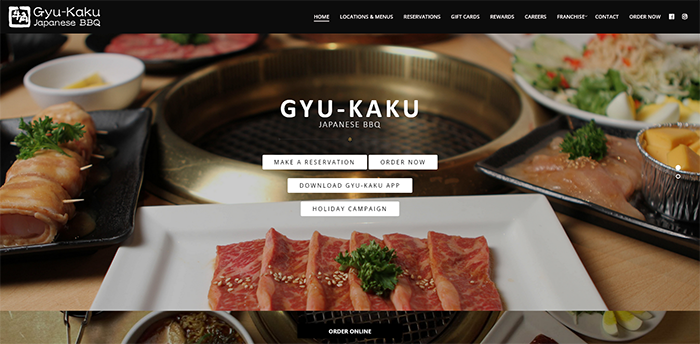
Gyu-Kaku delivers authenticity through certified Japanese A5 Wagyu. By also featuring USDA Prime beef, they offer steakhouse-quality dining at accessible prices.
From import to processing, Japanese staff strictly manage quality at every step, delivering the same authentic flavor found in premium yakiniku restaurants in Japan.
| Franchise fee | $50,000 |
|---|---|
| Initial investment | Approx. $1,215,444 to $2,606,540 |
| Royalty | 5% on annual sales up to approx. $1,500,000 4.5% on annual sales from approx. $1,500,000 to $2,000,000 4% on annual sales over approx. $2,000,000 |
| Number of restaurants | 825 worldwide (including 63 in the United States and 580 in Asia) |
| TripAdvisor rating | 4.3 out of 5.0 (442 reviews)*2 |
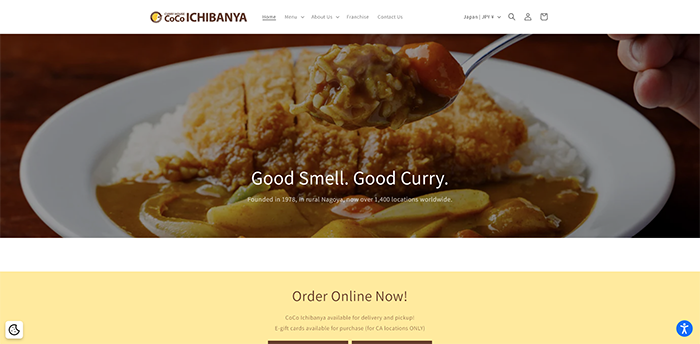
A wide range of toppings, from chicken katsu to omelets, ensures a fresh experience every visit, driving strong customer loyalty.
In addition to toppings, customers can adjust rice portions and spice levels, making the menu enjoyable for those who prefer milder flavors as well as those who want larger portions.
| Initial franchise fee | $40,000 |
|---|---|
| Initial investment | Not listed |
| Royalty | Not listed |
| Number of restaurants | 1,480 worldwide (including 11 in the United States and 1,467 in Asia) |
| TripAdvisor rating | 4.3 out of 5.0 (41 reviews)*3 |
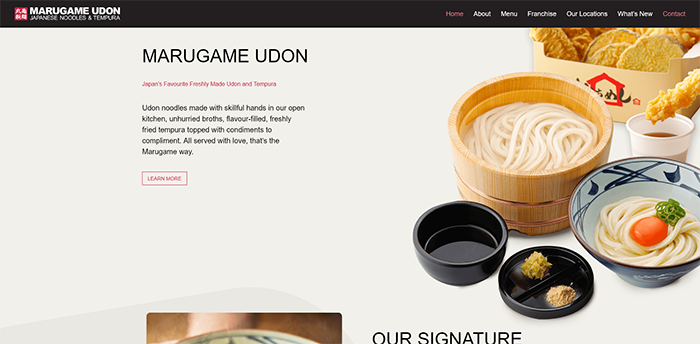
As a popular chain with 861 locations in Japan*1, franchisees are able to consistently serve udon noodles with a firm, chewy texture, supported by the headquarters after opening.
The noodle-making, boiling, and cooling processes are demonstrated in an open kitchen, allowing customers to enjoy a freshly made, live dining experience.
| Franchise fee | $40,000 to $64,000 |
|---|---|
| Initial investment | $1,126,500 to $1,980,000 |
| Royalty | 5% of sales |
| Number of restaurants | 1,188 worldwide (including 23 in the United States and 1,155 in Asia) |
| TripAdvisor rating | 4.5 out of 5.0 (108 reviews)*4 |
*1 Source: Marugame Udon official website(https://jp.marugame.com/shop/), as of a December 2025 survey
*2 TripAdvisor: New York City location, as of October 28, 2025(https://www.tripadvisor.jp/Restaurant_Review-g60763-d3175593-Reviews-Gyu_Kaku_Japanese_BBQ-New_York_City_New_York.html)
*3 TripAdvisor: Irvine location, as of October 28, 2025(https://www.tripadvisor.jp/Restaurant_Review-g32530-d9750729-Reviews-Coco_Ichibanya-Irvine_California.html)
*4 TripAdvisor: Los Angeles location, as of October 28, 2025(https://www.tripadvisor.jp/Restaurant_Review-g32655-d4019757-Reviews-Marugame_Monzo-Los_Angeles_California.html)
* TripAdvisor ratings are based on the highest-rated U.S. location.
*The number of restaurants is based on the following references. As of a December 2025 survey
Gyu-Kaku official website(https://www.gyukaku.ne.jp/world.php)
CoCo Ichibanya official website(https://www.ichibanya.co.jp/comp/ir/finance/highlight/graph01.html)
Marugame Udon official website(https://jp.marugame.com/shop/)