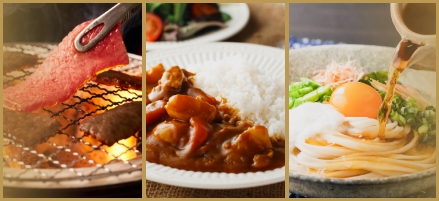
In the United States, udon, which is low in sugar and fat, and soba, which contains relatively less gluten, are gaining attention as Japanese noodle genres following ramen. This is because both align well with the growing demand in the United States for Japanese cuisine and health-conscious dining.
This article summarizes udon and soba franchising in the United States from a managerial perspective. It also explains advantages that distinguish tonkatsu franchises from other Japanese food franchise models.
According to WiseGuy Reports, the global udon market is expected to reach $2.2266 billion by 2025 and grow to $3.5 billion by 2035*1.
In a program aired by TV Asahi in April 2024 titled “Japanese Noodle Chain Rankings,” udon ranked first among noodle dishes favored by foreign viewers*2.
Because udon made outside Japan often uses the same type of noodles as ramen, the thickness, texture, and dashi flavor of authentic Japanese udon can come as a surprise, creating strong experiential value.
Because udon can be served quickly, it tends to have a very high turnover rate, making it easy to efficiently increase sales per seat. Because noodles are made from wheat flour and salt water, the risk of ingredient price fluctuations is relatively low, making food costs easier to control even within the noodle category.
For reference, TORIDOLL Holdings, the company behind Marugame Udon, achieved approximately 51.5 billion yen in revenue from its overseas operations in the fiscal year ended March 2025. Compared to the previous fiscal year, sales revenue increased by approximately 11.1 billion yen*3. Examples of menu prices include Kake Udon at $5.99, Curry Udon varieties at $9.65 each, and Niku Tama Udon at $13.49*4.
By maintaining affordable pricing to broaden the customer base, and combining high turnover with the added value of topping-based set sales (e.g., tempura, cheese, rice balls), it is possible to generate solid profits even in the United States.
According to POI Data Platform, there are 23,490 Japanese restaurants in the United States*5. Of these, only 118 locations serve udon*6.
Compared to ramen, another Japanese noodle category with 4,652 restaurants in the United States*7, competition remains very limited, indicating significant room for market development (all data as of October 2025).
The fewer competitors there are, the easier it is to differentiate. Because most locations are concentrated in California, Florida, and New York, expansion into other states makes it easier to establish a market position with first-mover advantage.
The udon preparation process primarily consists of preparing the noodles and dashi, followed by boiling and plating. While the development of dashi and noodles requires years of experience and knowledge, the boiling and plating processes do not require specialized cooking skills. Because these processes are easy to standardize, the model is well suited to franchise expansion.
Additionally, the menu can be expanded to include items such as curry udon, tempura udon, and meat udon, leveraging existing ingredients and cooking methods. More variations can broaden the customer base.
According to a “Key Insights” graphic published by DataString Consulting, the Asia-Pacific region, including Japan, and North America, including the United States, are indicated as the primary regions for the soba market*8.
In addition to the growing popularity of Japanese cuisine, soba—made primarily from buckwheat flour that is relatively low in gluten and carbohydrates—is attracting attention in North America, where health consciousness is increasing.
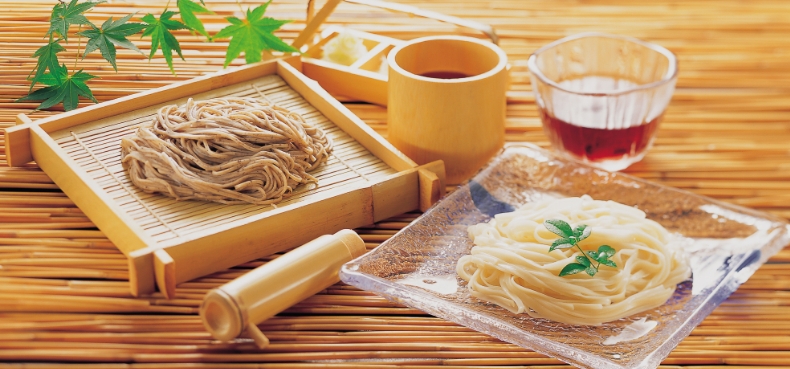
In certain regions of the United States, cold noodle dishes are a rarity, making chilled zaru soba an especially unique menu item that garners attention.
According to a study by DataString Consulting, global soba market revenue is expected to reach approximately $1.4 billion in 2025 and grow at a compound annual growth rate (CAGR) of about 7.1% through 2034*9. In the United States, growing health consciousness and demand for reduced-gluten options are driving increased demand for soba, indicating strong potential for future market growth.
In addition, focusing on basic menu items such as zaru soba and kake soba, and pairing them with side dishes like tempura, vegetable kakiage, and chilled tofu, makes it easier to manage variations in average check. Centered on simple noodle dishes, this model allows revenue to be built up through toppings and set sales of small side dishes, resulting in a more stable earnings structure.
By using dried noodles or frozen noodles with a long shelf life, it becomes easier to optimize the procurement cycle while minimizing ingredient management costs and food waste.
According to POI Data Platform data, there are 68 locations in the United States that offer soba, indicating a blue ocean market.
There are six locations in California, five in Florida, and four each in New York and Washington, with fewer than two locations in other states. This figure represents the total number of locations that include soba on the menu, and the number is even smaller when limited to soba-specialty restaurants (all data as of October 2025*10).
Because competition is even lower than for udon, soba stands out as one of the Japanese food categories in which it is easier to establish a market position with first-mover advantage.
In franchise systems, headquarters may also support the supply of ingredients, including seasonal toppings. With the introduction of a dedicated soba-making machine, there is no need to hire a skilled chef.
The cooking process is largely limited to preparing dashi, boiling the noodles, and plating. This can be described as a business model that is easy to launch regardless of staff experience or facility size.
Japanese cuisine is rapidly becoming a popular genre in the United States. Moving forward, however, there will be a growing demand for "authentic Japanese cuisine" rather than just "Japanese-style" adaptations.
Therefore, this media platform introduces carefully selected franchise brands directly from Japan. We highlight recommended companies and genres that offer promising profitability based on regional characteristics, so please use this information as a guide.
Find the Best
Japanese Restaurant Franchise
for Your Market

Operations of Marugame Udon in the United States are managed by Marugame Udon USA, LLC., a subsidiary of TORIDOLL Holdings. In 2019, the company formed a capital partnership with Hargett Hunter, an investment firm well versed in the U.S. dining market, and established a franchise model tailored to the U.S. market. A strategy was also announced to expand both franchised and company-operated restaurants*11.
As of November 2025, the brand operates more than 23 locations, primarily in states such as Hawaii, California, and Texas*12, accounting for approximately 19% of the U.S. udon market (118 locations)*13.
However, no information regarding franchise recruitment was found on the official website. Open franchise recruitment is not currently being conducted, and the company appears to be cautiously expanding through partnerships and area development agreements. If interested, please contact TORIDOLL Holdings or Marugame Udon USA, LLC directly.
This popular ramen joint in LA’s Japantown sometimes has a line, but it moves quickly. Despite having lots of tables, it can fill up quickly when it’s busy. My partner and I ordered tonkotsu udon, nikutama udon, shrimp tempura, and squid tempura. The tonkotsu pork broth was very flavorful, and the noodles were cooked well.
When you go in, you pick the broth you’d like (regular or large), and the staff customizes the toppings. After that, you order tempura (additional charge), grab a drink, and then pay at the register. Outdoor dining was available, but I got the nikutama udon to go, along with the shrimp and chicken tempura.
You pack your own items at a packing station before heading out. It’s popular, but the line moves quickly. The udon had a thick and chewy texture, while the tempura was light and crunchy.
As someone who had never been in this type of place before, I enjoyed the easy cafeteria-style setup: you order your udon first, then pick the tempura veggies and/or fish you want as you go around the counter on your way to the cashier. The udon noodles were made and boiled fresh. It makes for a fairly inexpensive dinner.
| Franchise fee | Not listed on the official website |
|---|---|
| Initial investment | Not listed on the official website |
| Royalty | Not listed on the official website |
Marugame Udon’s official U.S. website does not include franchise recruitment information. For reference, the official Canadian franchise page, which is open to franchise applicants on an ongoing basis, states that the estimated total investment required to open a new restaurant ranges from CAD 1.3 million to CAD 3.0 million (taxes unspecified).
| Company Name | TORIDOLL Holdings Corporation |
|---|---|
| Total Number of Restaurants (Including Company-Operated Locations) | 1,190 locations (22 in the United States, 1,158 in Asia) Based on information from the official website as of December 9, 2025 |
| Address | 19F, Shibuya Solasta, 1-21-1 Dogenzaka, Shibuya-ku, Tokyo, Japan |
Even within Japanese food, the most receptive customer segments vary by genre. This section introduces recommended Japanese food genres based on the characteristics of the prospective area, along with Japanese franchise brands that already operate locations in the United States. The focus is on the food that can be offered by joining each franchise brand.
Advertiser Disclosure:
We receive compensation from some of the companies listed below.This compensation may affect which companies are included and the order in which they appear.
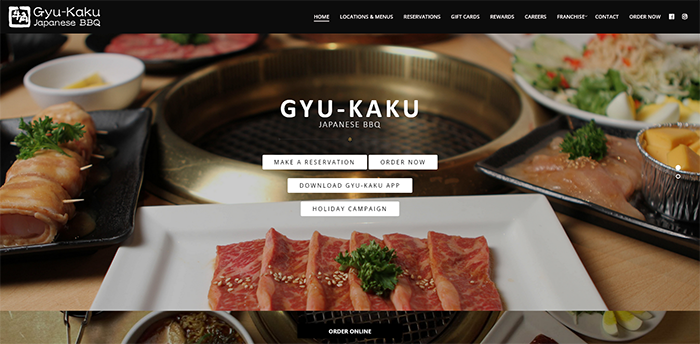
Gyu-Kaku delivers authenticity through certified Japanese A5 Wagyu. By also featuring USDA Prime beef, they offer steakhouse-quality dining at accessible prices.
From import to processing, Japanese staff strictly manage quality at every step, delivering the same authentic flavor found in premium yakiniku restaurants in Japan.
| Franchise fee | $50,000 |
|---|---|
| Initial investment | Approx. $1,215,444 to $2,606,540 |
| Royalty | 5% on annual sales up to approx. $1,500,000 4.5% on annual sales from approx. $1,500,000 to $2,000,000 4% on annual sales over approx. $2,000,000 |
| Number of restaurants | 825 worldwide (including 63 in the United States and 580 in Asia) |
| TripAdvisor rating | 4.3 out of 5.0 (442 reviews)*2 |
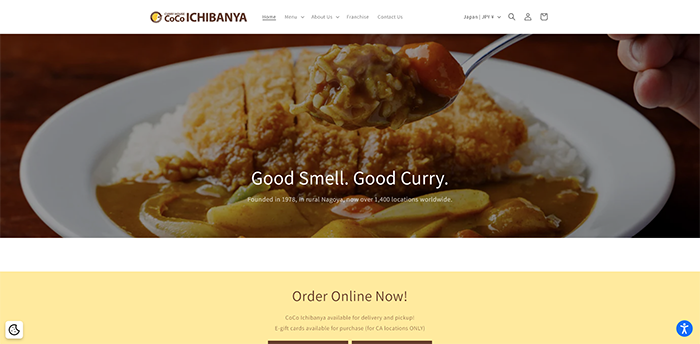
A wide range of toppings, from chicken katsu to omelets, ensures a fresh experience every visit, driving strong customer loyalty.
In addition to toppings, customers can adjust rice portions and spice levels, making the menu enjoyable for those who prefer milder flavors as well as those who want larger portions.
| Initial franchise fee | $40,000 |
|---|---|
| Initial investment | Not listed |
| Royalty | Not listed |
| Number of restaurants | 1,480 worldwide (including 11 in the United States and 1,467 in Asia) |
| TripAdvisor rating | 4.3 out of 5.0 (41 reviews)*3 |
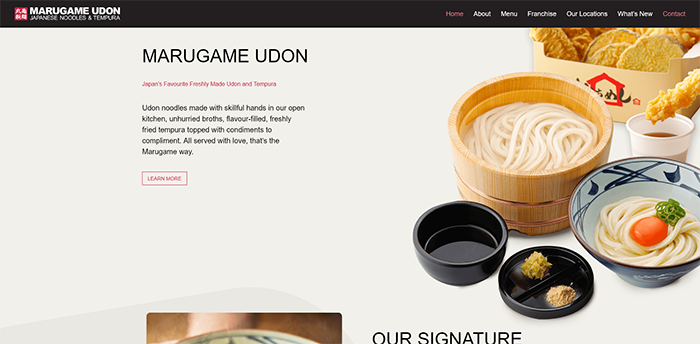
As a popular chain with 861 locations in Japan*1, franchisees are able to consistently serve udon noodles with a firm, chewy texture, supported by the headquarters after opening.
The noodle-making, boiling, and cooling processes are demonstrated in an open kitchen, allowing customers to enjoy a freshly made, live dining experience.
| Franchise fee | $40,000 to $64,000 |
|---|---|
| Initial investment | $1,126,500 to $1,980,000 |
| Royalty | 5% of sales |
| Number of restaurants | 1,188 worldwide (including 23 in the United States and 1,155 in Asia) |
| TripAdvisor rating | 4.5 out of 5.0 (108 reviews)*4 |
*1 Source: Marugame Udon official website(https://jp.marugame.com/shop/), as of a December 2025 survey
*2 TripAdvisor: New York City location, as of October 28, 2025(https://www.tripadvisor.jp/Restaurant_Review-g60763-d3175593-Reviews-Gyu_Kaku_Japanese_BBQ-New_York_City_New_York.html)
*3 TripAdvisor: Irvine location, as of October 28, 2025(https://www.tripadvisor.jp/Restaurant_Review-g32530-d9750729-Reviews-Coco_Ichibanya-Irvine_California.html)
*4 TripAdvisor: Los Angeles location, as of October 28, 2025(https://www.tripadvisor.jp/Restaurant_Review-g32655-d4019757-Reviews-Marugame_Monzo-Los_Angeles_California.html)
* TripAdvisor ratings are based on the highest-rated U.S. location.
*The number of restaurants is based on the following references. As of a December 2025 survey
Gyu-Kaku official website(https://www.gyukaku.ne.jp/world.php)
CoCo Ichibanya official website(https://www.ichibanya.co.jp/comp/ir/finance/highlight/graph01.html)
Marugame Udon official website(https://jp.marugame.com/shop/)