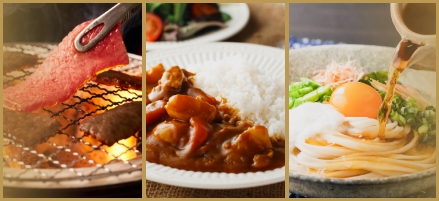
Tonkatsu is a hearty Japanese dish with a simple preparation: breaded and fried pork cutlet. Since frying pork is a cooking method widely recognized in English-speaking countries, the dish is likely to be easily understood and accepted by many consumers.
This article summarizes the strengths of tonkatsu franchising in the United States from a managerial perspective. It also explains advantages that distinguish tonkatsu franchises from other Japanese food franchise models.

The crispy texture of the breading and the satisfying bite of the meat come together in this quintessential Japanese dish, which is gradually gaining recognition outside Japan. In the United States, where meat-centered dishes such as steaks and hamburgers are deeply ingrained in the food culture, tonkatsu fits well with local tastes. Despite being fried, it features a light, crisp breading and is not overly greasy, making it relatively easy to enjoy.
Unlike sushi or ramen, which are becoming increasingly saturated in the United States, this category of Japanese cuisine is entering a growth phase as awareness expands. As a distinct genre, further market expansion is anticipated, and interest from prospective franchisees and investors is continuing to grow.
Let’s examine the advantages of a tonkatsu franchise from three perspectives: profitability, competitiveness, and operations.
According to USDA data, the United States has a robust pork consumption and supply base, with per capita pork supply projected to increase to 49.7 pounds in 2025 and to 50.9 pounds in 2026.*1. Given the substantial domestic supply of pork and stable market distribution, this is a business model in which raw materials are relatively easy to secure.
The main ingredients are simple, consisting of pork, breading, and oil, which makes food costs easier to control. One of the strengths is the ability to design menus at multiple price points using the same ingredients.
For example, by focusing on flagship menu items such as pork loin and fillet katsu set meals, and offering katsu rice bowls, katsu curry, and katsu sandwiches, it is possible to attract a broad customer base while increasing average spend per customer.
According to POI Data Platform, there are 23,490 Japanese restaurants in the United States*2. Of these, only 118 are tonkatsu restaurants*3. Compared to sushi restaurants (22,611 locations*4) and Japanese-style steakhouses (1,428 locations*5), competition in the tonkatsu market remains considerably lower (all data as of October 2025).
Differentiation becomes easier when there is less competition. Because most locations are concentrated in California and Hawaii, expansion into other states makes it easier to establish a strong market position with first-mover advantage.
Because the processes are simple, including marination, breading, frying, draining, and plating, it is easy to standardize manuals for training, staff development, and operations, making it well suited to franchise expansion.
This process is also adaptable to ingredients other than pork (e.g., chicken, seafood, tofu). This allows for expanded menu variations while accommodating religious and health-conscious preferences.
Another appeal is the high versatility of collaboration menus that pair well with other dishes and cuisines. Limited-time offerings such as katsu curry and katsu rice bowls can be introduced, along with katsu sandwiches, which are particularly well suited for delivery.
Compared to ramen, which requires lengthy preparation, and sushi, which demands mastery of skilled nigiri techniques, tonkatsu requires fewer training hours. As a result, the barriers to entry and operation are comparatively lower. This Japanese food category is well suited to multi-location franchise expansion, as its processes are easy to standardize and there remains significant room for new restaurant openings.
However, because of its simple processes, there is a high likelihood that later entrants may imitate the menu, which is a drawback. Differentiation can be achieved by joining a franchise originating in Japan and replicating authentic flavors and techniques.
This media platform also features three recommended Japanese franchise brands, carefully selected based on regional suitability. Please be sure to review them as well.
Even within Japanese food, the most receptive customer segments vary by genre. This section introduces recommended Japanese food genres based on the characteristics of the prospective area, along with Japanese franchise brands that already operate locations in the United States. The focus is on the food that can be offered by joining each franchise brand.
Advertiser Disclosure:
We receive compensation from some of the companies listed below.This compensation may affect which companies are included and the order in which they appear.
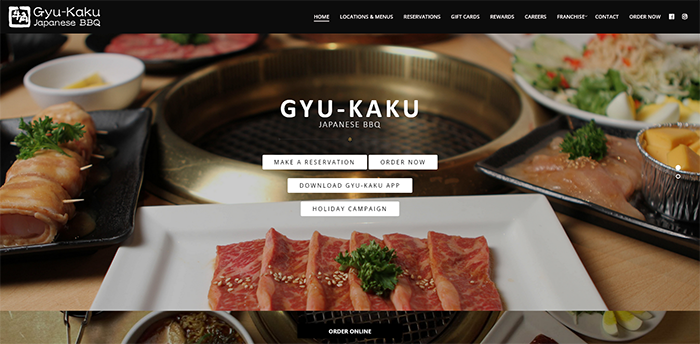
Gyu-Kaku delivers authenticity through certified Japanese A5 Wagyu. By also featuring USDA Prime beef, they offer steakhouse-quality dining at accessible prices.
From import to processing, Japanese staff strictly manage quality at every step, delivering the same authentic flavor found in premium yakiniku restaurants in Japan.
| Franchise fee | $50,000 |
|---|---|
| Initial investment | Approx. $1,215,444 to $2,606,540 |
| Royalty | 5% on annual sales up to approx. $1,500,000 4.5% on annual sales from approx. $1,500,000 to $2,000,000 4% on annual sales over approx. $2,000,000 |
| Number of restaurants | 825 worldwide (including 63 in the United States and 580 in Asia) |
| TripAdvisor rating | 4.3 out of 5.0 (442 reviews)*2 |
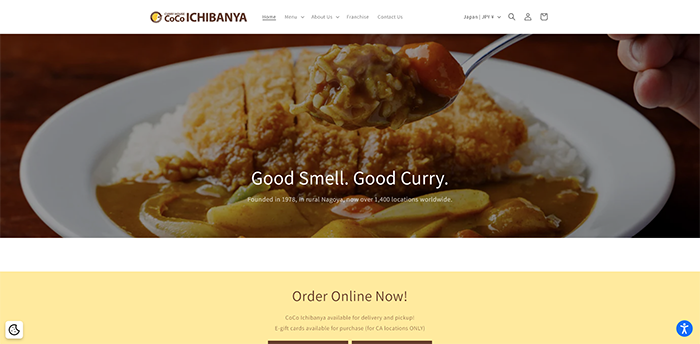
A wide range of toppings, from chicken katsu to omelets, ensures a fresh experience every visit, driving strong customer loyalty.
In addition to toppings, customers can adjust rice portions and spice levels, making the menu enjoyable for those who prefer milder flavors as well as those who want larger portions.
| Initial franchise fee | $40,000 |
|---|---|
| Initial investment | Not listed |
| Royalty | Not listed |
| Number of restaurants | 1,480 worldwide (including 11 in the United States and 1,467 in Asia) |
| TripAdvisor rating | 4.3 out of 5.0 (41 reviews)*3 |
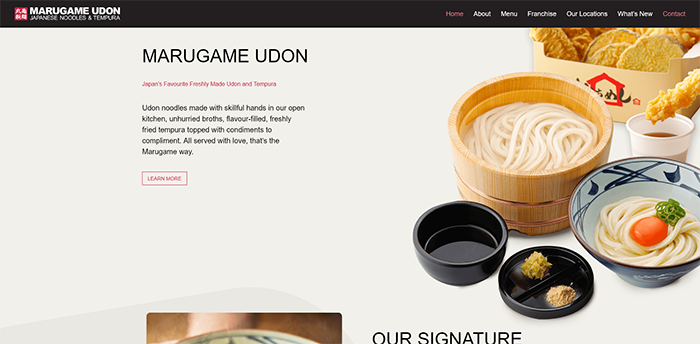
As a popular chain with 861 locations in Japan*1, franchisees are able to consistently serve udon noodles with a firm, chewy texture, supported by the headquarters after opening.
The noodle-making, boiling, and cooling processes are demonstrated in an open kitchen, allowing customers to enjoy a freshly made, live dining experience.
| Franchise fee | $40,000 to $64,000 |
|---|---|
| Initial investment | $1,126,500 to $1,980,000 |
| Royalty | 5% of sales |
| Number of restaurants | 1,188 worldwide (including 23 in the United States and 1,155 in Asia) |
| TripAdvisor rating | 4.5 out of 5.0 (108 reviews)*4 |
*1 Source: Marugame Udon official website(https://jp.marugame.com/shop/), as of a December 2025 survey
*2 TripAdvisor: New York City location, as of October 28, 2025(https://www.tripadvisor.jp/Restaurant_Review-g60763-d3175593-Reviews-Gyu_Kaku_Japanese_BBQ-New_York_City_New_York.html)
*3 TripAdvisor: Irvine location, as of October 28, 2025(https://www.tripadvisor.jp/Restaurant_Review-g32530-d9750729-Reviews-Coco_Ichibanya-Irvine_California.html)
*4 TripAdvisor: Los Angeles location, as of October 28, 2025(https://www.tripadvisor.jp/Restaurant_Review-g32655-d4019757-Reviews-Marugame_Monzo-Los_Angeles_California.html)
* TripAdvisor ratings are based on the highest-rated U.S. location.
*The number of restaurants is based on the following references. As of a December 2025 survey
Gyu-Kaku official website(https://www.gyukaku.ne.jp/world.php)
CoCo Ichibanya official website(https://www.ichibanya.co.jp/comp/ir/finance/highlight/graph01.html)
Marugame Udon official website(https://jp.marugame.com/shop/)