Success in the U.S. Japanese restaurant market depends heavily on where you open. Business environments shift drastically from state to state, making location a critical factor.
Labor laws and minimum wages vary, directly impacting your payroll costs. Business permits and liquor licenses follow strict local rules, altering your timeline and overhead.
Demographic shifts—such as local Asian population ratios—dictate menu preferences and dining demand, while tourist-heavy areas create distinct high-traffic opportunities.
Navigating these regional differences is essential for long-term profitability. Choosing the right state for your background and goals is your first strategic step toward business ownership.
The U.S. Japanese restaurant market is booming. According to a JETRO survey, the number of Japanese restaurants grew 1.6x over twelve years.
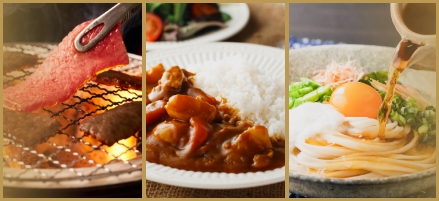
Offerings have diversified beyond traditional sushi to include ramen, yakiniku, udon, and curry, creating dynamic business opportunities nationwide (JETRO report).
While the market expands, independent restaurant owners face severe challenges in menu design and brand building. A franchise model reduces these risks through established brand power and proven operational systems.
To start your journey, explore Choose by area characteristics Three Selected Japanese Food Franchises to find the right fit.
Find the Best
Japanese Restaurant Franchise
for Your Market
Regional markets offer distinct opportunities. Based on data from the National Restaurant Association, we analyze state and city restaurant dynamics to help you identify prime locations for Japanese food franchises.
Driven by strong population and tourism growth, Florida offers exceptional dining potential.
The National Restaurant Association’s 2025 report shows full-service dining ($52B) outpacing limited-service ($42.8B) by nearly $10B, with major market activity led by Miami ($32.9B), Orlando ($18.7B), Tampa ($15.5B), and Jacksonville ($8B).
Japanese Restaurant Franchise Opportunities in Florida
Texas features a massive, booming dining market driven by strong economic and population growth. The National Restaurant Association’s 2026 report projects $140.4 billion in annual restaurant sales across 58,426 locations, making it a prime, highly lucrative state for Japanese franchise expansion.
Even within Japanese food, the most receptive customer segments vary by genre. This section introduces recommended Japanese food genres based on the characteristics of the prospective area, along with Japanese franchise brands that already operate locations in the United States. The focus is on the food that can be offered by joining each franchise brand.
Advertiser Disclosure:
We receive compensation from some of the companies listed below.This compensation may affect which companies are included and the order in which they appear.
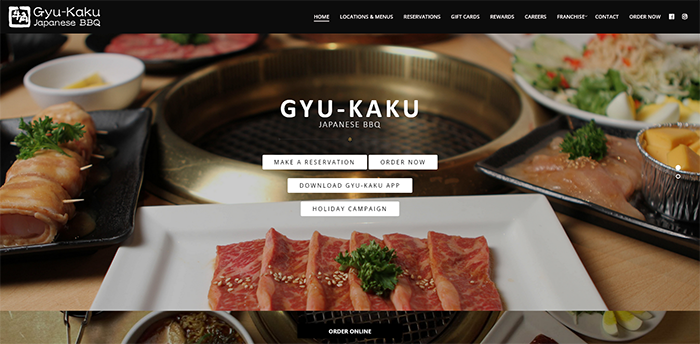
Gyu-Kaku delivers authenticity through certified Japanese A5 Wagyu. By also featuring USDA Prime beef, they offer steakhouse-quality dining at accessible prices.
From import to processing, Japanese staff strictly manage quality at every step, delivering the same authentic flavor found in premium yakiniku restaurants in Japan.
| Franchise fee | $50,000 |
|---|---|
| Initial investment | Approx. $1,215,444 to $2,606,540 |
| Royalty | 5% on annual sales up to approx. $1,500,000 4.5% on annual sales from approx. $1,500,000 to $2,000,000 4% on annual sales over approx. $2,000,000 |
| Number of restaurants | 825 worldwide (including 63 in the United States and 580 in Asia) |
| TripAdvisor rating | 4.3 out of 5.0 (442 reviews)*2 |
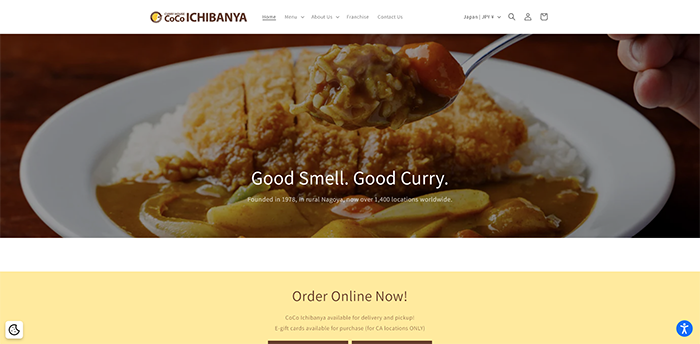
A wide range of toppings, from chicken katsu to omelets, ensures a fresh experience every visit, driving strong customer loyalty.
In addition to toppings, customers can adjust rice portions and spice levels, making the menu enjoyable for those who prefer milder flavors as well as those who want larger portions.
| Initial franchise fee | $40,000 |
|---|---|
| Initial investment | Not listed |
| Royalty | Not listed |
| Number of restaurants | 1,480 worldwide (including 11 in the United States and 1,467 in Asia) |
| TripAdvisor rating | 4.3 out of 5.0 (41 reviews)*3 |
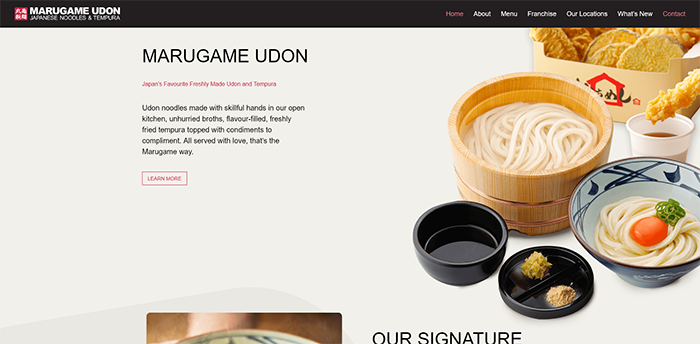
As a popular chain with 861 locations in Japan*1, franchisees are able to consistently serve udon noodles with a firm, chewy texture, supported by the headquarters after opening.
The noodle-making, boiling, and cooling processes are demonstrated in an open kitchen, allowing customers to enjoy a freshly made, live dining experience.
| Franchise fee | $40,000 to $64,000 |
|---|---|
| Initial investment | $1,126,500 to $1,980,000 |
| Royalty | 5% of sales |
| Number of restaurants | 1,188 worldwide (including 23 in the United States and 1,155 in Asia) |
| TripAdvisor rating | 4.5 out of 5.0 (108 reviews)*4 |
*1 Source: Marugame Udon official website(https://jp.marugame.com/shop/), as of a December 2025 survey
*2 TripAdvisor: New York City location, as of October 28, 2025(https://www.tripadvisor.jp/Restaurant_Review-g60763-d3175593-Reviews-Gyu_Kaku_Japanese_BBQ-New_York_City_New_York.html)
*3 TripAdvisor: Irvine location, as of October 28, 2025(https://www.tripadvisor.jp/Restaurant_Review-g32530-d9750729-Reviews-Coco_Ichibanya-Irvine_California.html)
*4 TripAdvisor: Los Angeles location, as of October 28, 2025(https://www.tripadvisor.jp/Restaurant_Review-g32655-d4019757-Reviews-Marugame_Monzo-Los_Angeles_California.html)
* TripAdvisor ratings are based on the highest-rated U.S. location.
*The number of restaurants is based on the following references. As of a December 2025 survey
Gyu-Kaku official website(https://www.gyukaku.ne.jp/world.php)
CoCo Ichibanya official website(https://www.ichibanya.co.jp/comp/ir/finance/highlight/graph01.html)
Marugame Udon official website(https://jp.marugame.com/shop/)